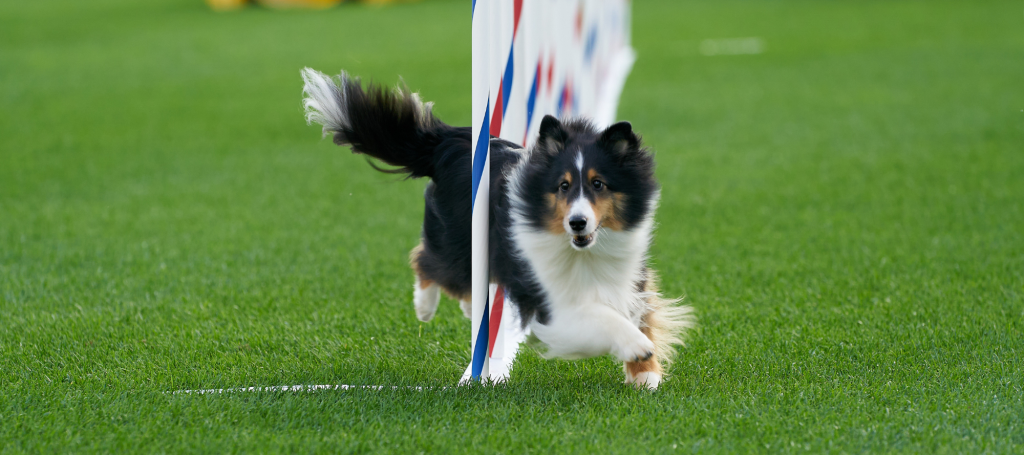



For active dogs, strength starts deep. The muscles that support the spine play an important role in overall movement, stability, and performance.
Dog owners, trainers, handlers, and veterinarians all want to help dogs stay fit and reduce the risk of injury. Canine sports medicine needs further investigations to better understand how structured exercise affects a dog’s body, particularly the muscles that help stabilize the core.
That is the focus of CHF-funded work led by Dr. Cynthia Otto and her team at the Penn Vet Working Dog Center in a project which examines how an exercise regimen changes core muscle structure and performance scores in healthy dogs.
Studying Strength from the Inside Out
This project uses strength and fitness testing, a 12-week structured fitness program, and advanced imaging to examine how exercise changes the muscles along the spine that provide stability to the whole body.
Healthy, active dogs are participating in the study. Each dog undergoes strength and fitness testing and a CT scan before starting the exercise regimen. After 12 weeks, the dogs repeat the same tests and scans so researchers can evaluate how exercise affects muscle structure and performance assessment scores.
The dogs in the study are active pet dogs rather than elite competitors. This makes the research especially meaningful for many dogs whose lives include regular activity, such as hiking, regular play, jogging, or training for a sport or performance activity.
“Our goal is to create science-based exercise recommendations to keep dogs strong, fit, and less likely to get injured, especially dogs that are active in sports, work, or performance activities,” according to Dr. Otto. “This research will help veterinarians, trainers, and dog owners design programs that support long-term musculoskeletal health.”
Building Evidence for Dogs in Motion
Canine sports medicine and rehabilitation is a growing field in veterinary medicine, and studies like this one build knowledge to improve care. While many dog owners understand that exercise matters, researchers are working to understand how specific programs change canine muscle structure and function to benefit dogs.
The use of CT imaging provides the team with a detailed way to examine changes in the spinal and hindlimb muscles. Pairing advanced imaging with performance assessments links what is happening inside the body with how dogs move and perform.
The dogs enrolled in the study are on schedule to complete the program by the end of the year. Once the data are analyzed and interpreted, researchers will better understand how structured exercise changes core muscles and affects fitness.
For dogs who work, compete, train, or simply love to be active, this research matters. It transforms fun or well-intended activity into recommendations backed by science, helping veterinarians, trainers, and owners make informed decisions that support lifelong health.
CHF donor support makes this work possible. Projects like these build the knowledge dogs need to move well, recover well, and live active, healthy lives.
Support canine sports medicine research at akcchf.org/DogsInMotion.