

About Dr. Thomasy
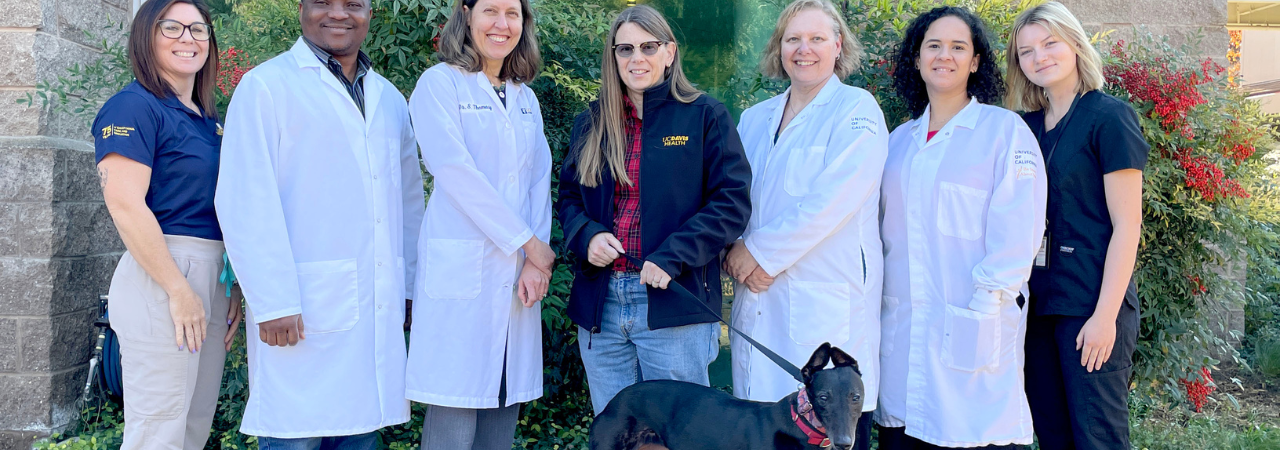
Dr. Sara Thomasy is a board-certified veterinary ophthalmologist and professor dedicated to improving the vision and eye health of dogs through compassionate, evidence-based research. Her scientific curiosity is often inspired by her patients—particularly those whose conditions present few treatment options. One such patient, a Boston Terrier named Judy with corneal endothelial dystrophy (CED), motivated Dr. Thomasy to launch her first clinical trial and secure her first grant from the AKC Canine Health Foundation (CHF). Her team’s pioneering work resulted in the development of a new surgical technique, superficial keratectomy with advancement hood flap (SKCAHF), which successfully improved vision and reduced corneal swelling in affected dogs. A second clinical trial demonstrated that topical ripasudil can delay CED progression. These advances—sparked by one patient’s story—reflect Dr. Thomasy’s deep commitment to translating clinical challenges into meaningful scientific discoveries that improve the lives of dogs and their families.
Research Approach
Dr. Thomasy’s current research focuses on progressive retinal atrophy (PRA) in racing Greyhounds, a group of inherited retinal diseases that lead to blindness and for which no treatment currently exists. Her team was first contacted by a veterinary ophthalmologist in San Diego who diagnosed multiple retired racing Greyhounds with PRA. Partnering with Fast Friends, a Greyhound rescue organization in Southern California, Dr. Thomasy and her collaborators collected DNA samples and clinical data from affected dogs.
The research revealed that nearly all affected Greyhounds were male, strongly suggesting an X-linked inheritance pattern. Genetic analysis confirmed a large deletion in a gene essential for photoreceptor function, representing a novel form of X-linked PRA not previously described in any dog breed. Interestingly, mutations in the same gene also cause retinal diseases in humans, highlighting the relevance of this discovery across species.
Dr. Thomasy’s team is now developing a genetic test to identify carriers of this mutation, enabling breeders and owners to prevent the birth of affected puppies and better manage the condition in existing dogs. Additionally, her group identified several Greyhounds with PRA unrelated to the X-linked mutation or any known cause, suggesting the existence of new forms of PRA that are now under further investigation.
This project also supports the training of Dr. Uchenna Nlebedum, a Nigerian veterinarian completing his PhD under Dr. Thomasy’s mentorship, in collaboration with canine geneticist Dr. Danika Bannasch at UC Davis—strengthening the next generation of veterinary researchers.
Potential Impact
The identification of the genetic cause of X-linked PRA in Greyhounds represents a significant advancement in both canine genetics and ophthalmology. The development of a genetic screening test will empower breeders to make informed decisions, greatly reducing the incidence of blindness in future generations of Greyhounds. For owners, early detection allows for better preparation, care, and training for dogs that may lose vision, improving their quality of life and adoptability.
Beyond Greyhounds, this discovery provides important insights into human retinal diseases, since the same gene plays a role in visual function across species. The project, made possible through funding from the AKC Canine Health Foundation, not only protects the vision of countless dogs but also demonstrates the profound impact of comparative research. Through her innovative studies and mentorship, Dr. Thomasy continues to advance both animal health and translational science, ensuring a lasting legacy in the fight against inherited blindness.