

Epilepsy can be frightening for any dog owner. Seizures can strike without warning, turning an ordinary moment into one filled with confusion, fear, and helplessness. One minute, a dog is playing, resting, or walking through the house as usual, and the next, everything changes.
In dogs, epilepsy is the most common neurologic disorder, affecting approximately 1 in 100 dogs. The most common form is idiopathic epilepsy, meaning there is no identifiable underlying cause for the seizures. In many of these cases, veterinarians and researchers suspect genetics plays an important role.
Understanding epilepsy today requires more than relying on information from decades ago. Dogs, breeding practices, and veterinary care continue to evolve, meaning the way epilepsy appears, progresses, and responds to treatment may also change over time. Research must continually revisit these diseases to build a clearer and more accurate picture of what dogs and owners are facing now.
That is the focus of new AKC Canine Health Foundation-funded research led by Dr. Yoshihiko Yu at the University of Pennsylvania School of Veterinary Medicine.
A 20-Year Question Worth Asking Again
For nearly a decade, Dr. Yu has worked to advance scientific understanding of canine epilepsy. In earlier research focused on Pomeranians, he helped identify focal seizures in the breed, a type of seizure that affects only one part of the brain.
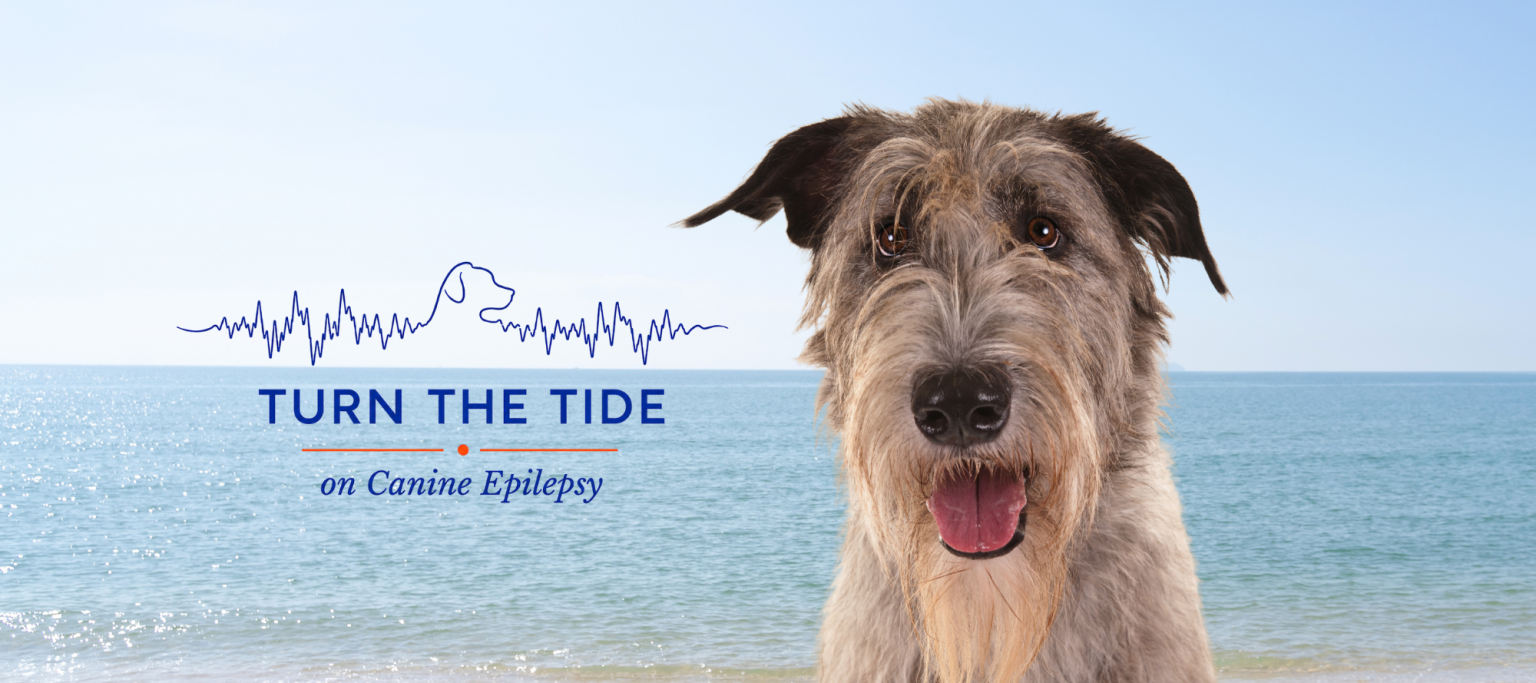
Now, Dr. Yu is turning his attention to Irish Wolfhounds.
Nearly 20 years ago, his PennVet colleague Dr. Margret Casel conducted a survey on epilepsy in Irish Wolfhounds. In a study of nearly 800 dogs, she reported that almost 20% had idiopathic epilepsy and that affected Irish Wolfhounds lived, on average, two years less than their healthy peers.
“The high incidence of seizures in the Irish Wolfhound, along with the decreased longevity in affected animals, underscore the need for a breeding program designed to eliminate the disease from the breed,” Dr. Casel wrote in her 2006 paper.
Since then, no further research has revisited epilepsy in Irish Wolfhounds. Dr. Yu believes now is the right time.
“During that time, our management of epilepsy has improved and changed,” he told CHF. “There are newer seizure drugs and newer diagnostic techniques available, and breeders have worked hard to exclude dogs with epilepsy from breeding. So, there is a chance that the prevalence of idiopathic epilepsy in Irish Wolfhounds has changed.”
Understanding Epilepsy in Irish Wolfhounds Today
Working with the Irish Wolfhound Foundation, Dr. Yu will conduct a three-part nationwide study that includes owner questionnaires and additional clinical research. The first phase is a brief questionnaire designed to better understand prevalence by asking general questions about each dog, including whether the dog has seizures.
Dogs identified with seizures may then move into the second phase, which gathers more detailed information about the condition, including seizure type, treatment, how well seizures are controlled, and the impact epilepsy has on both the dog’s and owner’s quality of life.
The third phase focuses on future genetic discovery by collecting DNA samples from affected dogs to build a DNA archive. Researchers hope this resource will help identify genetic risk factors linked to epilepsy in Irish Wolfhounds.
“We hope this study will provide the most updated picture of idiopathic epilepsy in Irish Wolfhounds in the United States,” Dr. Yu said.
Why Quality of Life Matters
For Dr. Yu, one of the most meaningful parts of the research is learning more about quality of life.
“Most studies focus on treatments but most people haven’t focused on their quality of life as much. Epilepsy can affect the entire household, not just the dog itself, so the owner wants to know about quality of life and real life information,” he told CHF.
That question matters. Research that listens to owners, studies affected dogs, and builds resources for future discovery helps turn concern into knowledge and knowledge into progress.
Your support helps CHF fund research that asks important questions for dogs and the families who love them. Help Turn the Tide on Epilepsy at akcchf.org/TurnTheTide.