

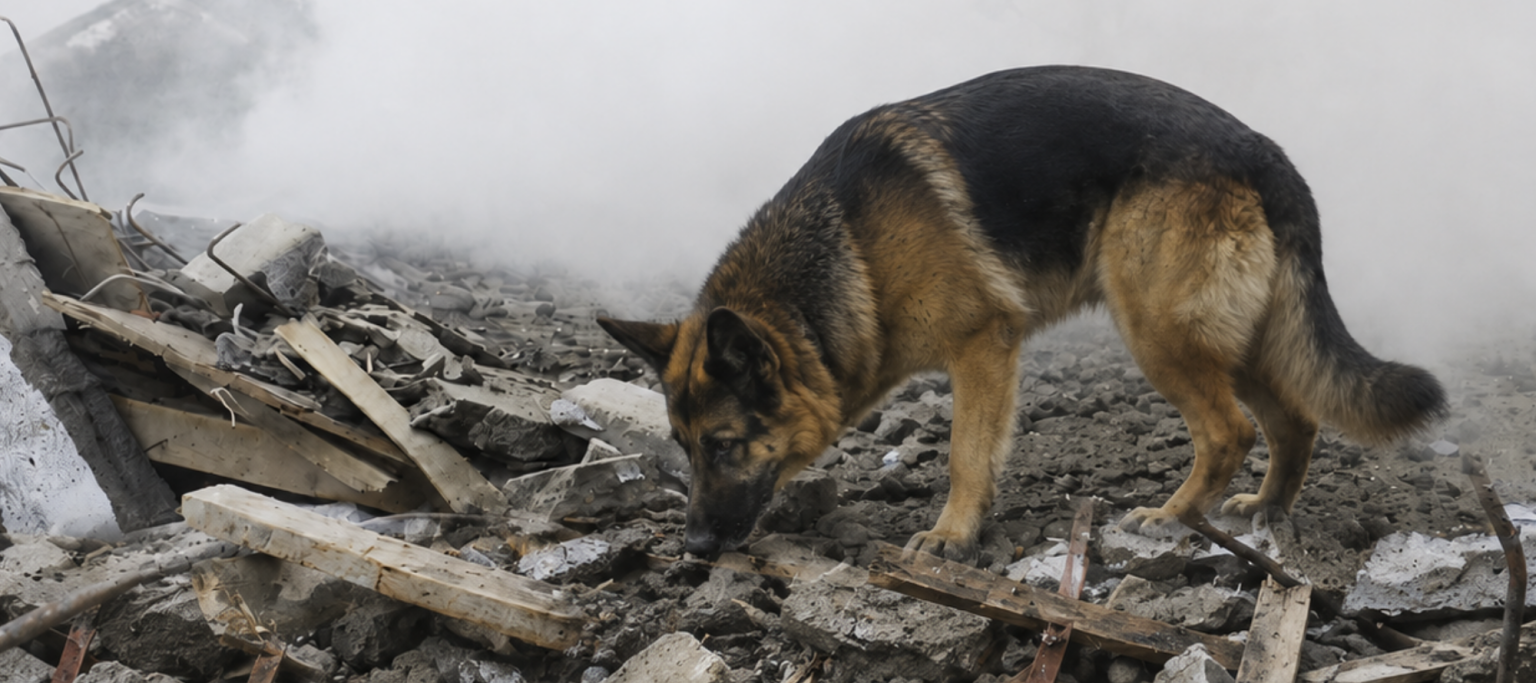
After the events of September 11, 2001, search-and-rescue dogs raced into places no one else could safely go.
Working alongside firefighters, police officers, and rescue teams, these remarkable dogs searched through ash, crushed concrete, twisted steel, and mountains of rubble at the World Trade Center, the Pentagon, and the Staten Island landfill. They climbed through the wreckage, inhaled dust, and faced conditions unlike anything they had encountered before.
As we mark the 25th anniversary of 9/11, we remember the dogs who answered the call and what their lives can still teach us.
Thanks to a remarkable long-term series of studies spanning more than 15 years and 8 CHF-funded grants, we know the answer, and it’s one of the most hopeful stories to emerge from that tragic day.
Following the Heroes for 15 Years
Dr. Otto at the University of Pennsylvania led a research team that followed 95 search-and-rescue dogs that worked at the 9/11 disaster sites and compared them with similarly trained dogs that were not deployed on 9/11.
For 15 years, the team tracked their health, reviewed veterinary records, and, when possible, performed autopsies after the dogs died. They wanted to know whether exposure to smoke, dust, chemicals, and debris would shorten the dogs’ lives or increase their risk of serious diseases such as cancer.
The News Everyone Hoped For
Given the hazardous conditions these dogs faced, many feared the worst.
Instead, researchers found something extraordinary.
The dogs that served at Ground Zero lived just as long as the dogs that did not deploy to the sites. Their median age at death was nearly identical, and they were no more likely to die from cancer than the comparison group.
In fact, the most common causes of death in both groups were the common issues associated with aging, such as arthritis, kidney disease, heart disease, and other degenerative conditions. Cancer was the second most common cause of death in both groups, not more common in the dogs that responded to 9/11.
Researchers did find evidence that the 9/11 deployed dogs had inhaled particulate material that remained in their lungs for their lifetime. Yet despite that exposure, they found no difference in overall causes of death between dogs that served and those that did not.
Why This Study Matters
Not every research study uncovers the cause of disease or a groundbreaking treatment.
Sometimes, one of the most meaningful discoveries is learning that a feared outcome didn’t happen.
This series of studies provided reassuring news for the handlers who devoted years to these extraordinary dogs and for everyone who wondered whether their service came at an unseen cost.
It also shows the value of long-term science.
For years, researchers followed these dogs without knowing what the final answers would be. That kind of sustained investment can be difficult when research is often expected to produce results quickly.
Some of the most important questions in science take time. The commitment to these studies lasted as long as the dogs did, allowing researchers to answer questions that no short-term study ever could.
A Legacy That Lives On
The search-and-rescue dogs of 9/11 gave everything they had in service to others.
Twenty-five years later, their legacy extends beyond the lives they touched. Their participation in long-term research has helped scientists better understand the lasting health effects of environmental exposures in working dogs and offers reassurance that these canine heroes lived long, full lives despite the extraordinary circumstances they faced.
Sometimes, the most inspiring scientific discovery isn’t finding evidence of harm.
It’s discovering resilience.
Paws & Reflect
🐾 Remembering the Heroes
Nearly 100 search-and-rescue dogs that responded to the 9/11 terrorist attacks were followed for 15 years to understand the long-term effects of their service.
🐾 The Inspiring Finding
Despite working in hazardous conditions, the deployed dogs lived just as long as similar dogs that were not deployed and were not more likely to die from cancer or other major diseases.
🐾 Why It Matters
As we mark the 25th anniversary of 9/11, this research reminds us that science can provide not only answers—but also hope. The enduring health of these remarkable dogs is a testament to their resilience and an inspiring part of their lasting legacy.