

How to Apply
Use the application instructions found on this page, along with the guidance provided in the specific funding opportunity, to submit your grant application. Ensure all required sections are completed and submitted according to the outlined process.
Application Guidelines
Understanding the application process is essential for successfully submitting your grant application to the AKC Canine Health Foundation (CHF). Use this section to learn how to submit your application and where to find key information, such as formatting requirements, due dates, and eligibility criteria.
CHF requests for proposals (RFP) are due on a seasonal basis, typically in January, May, and September, and may focus on specific research areas or topics of canine health. Carefully review all instructions and requirements, as non-compliant applications may be declined or delayed.
Before submitting, ensure that all required application elements are complete. All submissions must meet the Foundation’s eligibility requirements and must use CHF’s application templates for both grant proposals and subsequent reporting by awardees.

Human Use of Animal Policy
Ensure your proposal aligns with CHF’s humane research guidelines.

Eligibility Requirements
Verify eligibility requirements to ensure compliance before submitting your proposal.

Application Guidelines
Check application guidelines to avoid delays or rejections in submission.

Application Templates
Follow template guidance to ensure proper formatting and complete submission.
Tips for Successful Application
Grant Application Tips
Helpful tips to guide you in writing and submitting your grant application to CHF. Please note that non-compliant applications may result in delays or be declined.
- Understand the Guidelines: Review the grant application instructions carefully. Ensure your project aligns with CHF’s mission and funding priorities.
- Define Clear Objectives: Outline specific, measurable goals for your research. Highlight the potential impact on canine health and the scientific community.
- Provide a Strong Methodology: Clearly describe your research design, methods, and analysis plan. Ensure your approach is thorough, realistic, and scientifically sound.
- Highlight Impact: Emphasize how your research contributes new knowledge or solutions to existing challenges in canine health.
- Demonstrate Expertise: Include your qualifications and relevant experience. Showcase your team’s capability to successfully execute the project.
- Follow Submission Requirements: Ensure your application is complete, formatted correctly, and submitted by the deadline. Double-check all attachments and forms.
Essentials of the Research Plan
The research plan is the main part of a grant application describing a principal investigator’s proposed research, stating its importance and how it will be conducted. Here are the key components of a strong research plan:
- Specific Aims: Clearly define the goals of your research. Identify the problems you aim to address and the questions you seek to answer.
- Background and Significance: Provide context for your study by summarizing relevant research and explaining the importance of your work. Highlight how your research fills gaps in knowledge or addresses critical canine health challenges.
- Preliminary Data: Include any initial findings or prior research that supports your hypothesis. This demonstrates the feasibility of your project and strengthens your proposal.
- Research Design and Methods: Detail the approach you will take to achieve your aims. Include study design, data collection, analysis techniques, and timelines. Ensure your methods are robust, replicable, and aligned with your objectives.
- Expected Outcomes and Impact: Discuss the potential results of your research and their significance. Explain how your findings could advance canine health and benefit the broader scientific community.
Common Problems Identified During Peer Review
Below is a list of many common problems that result in non-competitively scored applications.
- Lack of Clear Objectives: Applications without clearly defined research aims or hypotheses often fail to convey the purpose and significance of the study.
- Weak Rationale: Failing to establish the importance of the research question or its relevance to canine health can undermine the proposal’s impact.
- Inadequate Preliminary Data: Insufficient or poorly presented preliminary findings may cast doubt on the feasibility of the proposed project.
Selection Process
The rigorous selection process ensures that every funded project meets rigorous scientific standards and directly supports our mission. Our process includes:
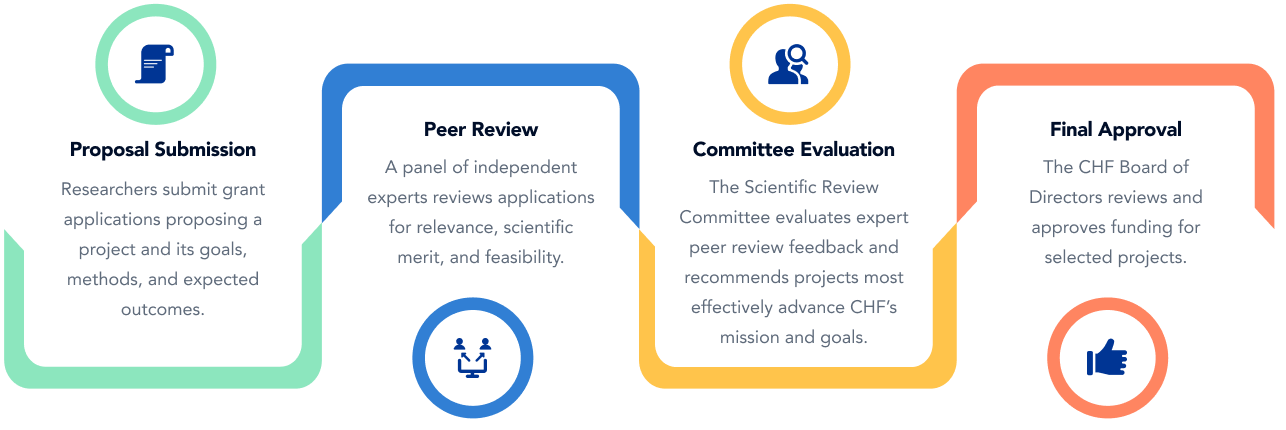
This clear and rigorous selection process ensures that all funded projects are impactful and uphold the highest scientific standards.