

The Joys and Intensity of High-Energy Sport
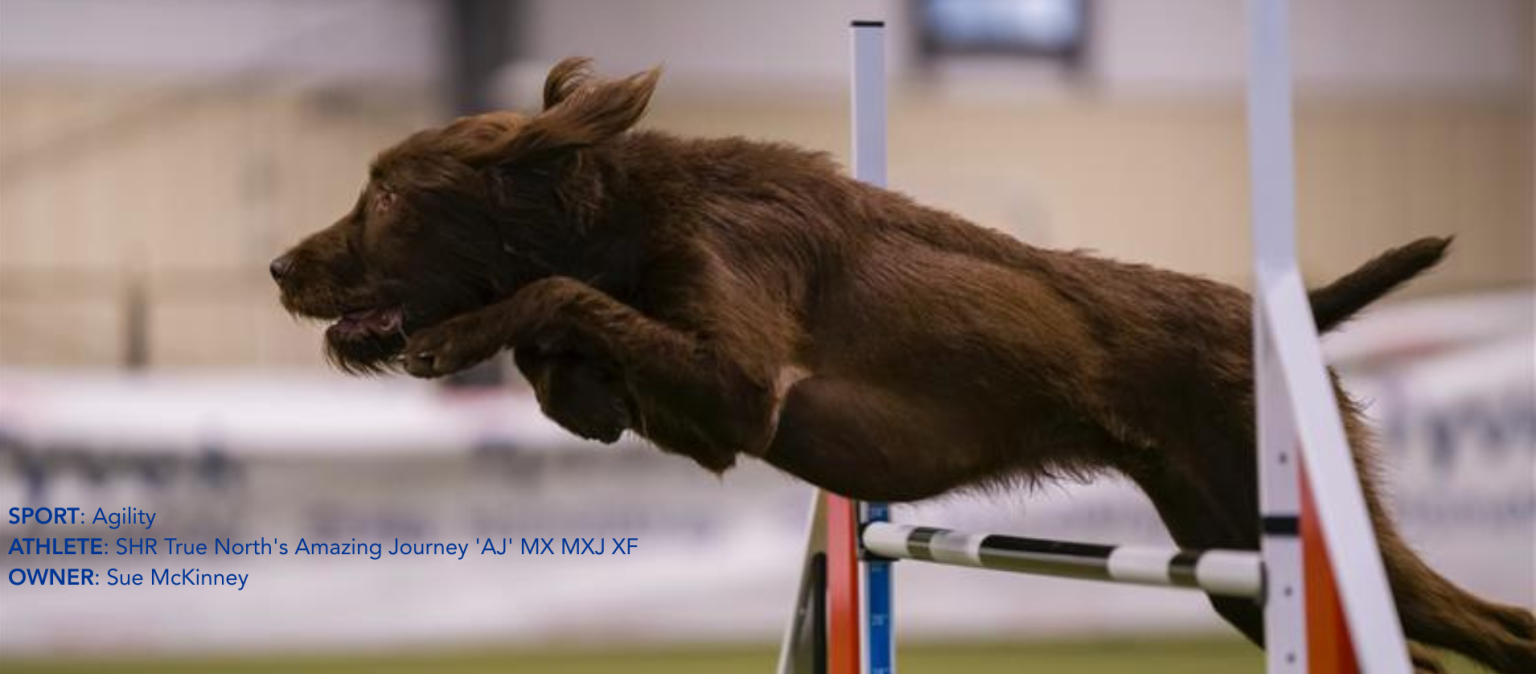
Agility is one of the most captivating canine sports—fast, technical, and demanding. In 2024 alone, more than 1.2 million entries were recorded in AKC agility events. With dogs racing through tunnels, weaving through poles, and leaping over jumps, it is no surprise the sport is growing and draws fans nationwide.
Handlers rely on voice, motion, and subtle body cues to guide their dogs through the course. The dogs perform entirely off-leash, and no treats or physical contact are allowed. The result is a complex, synchronized performance built on communication, trust, and precision.
High-Performance Dogs Face Higher Injury Risk
Beneath the excitement of agility is a reality shared by both canine and human athletes: injuries can happen. Studies estimate that as many as 40 percent of agility dogs experience some form of injury over time. Yet unlike their human counterparts, these canine athletes don’t have access to performance monitoring tools that can help identify early signs of fatigue, overtraining, or stress—tools that could support safer, smarter training.
That’s the gap Dr. Arielle Pechette Markley is working to close.
Bringing Human-Level Technology to Canine Athletics
“Agility dogs and other canine athletes have a high risk of injury, just like human athletes,” said Dr. Arielle Pechette Markley, principal investigator of a pioneering study. “In humans, wearables like fitness trackers help monitor training load and injury risk. We don’t currently have anything similar for dogs.”
Dr. Markley’s study, titled AGILE (Agility Innovations Leveraging Electronics), aims to change that. Her team developed a custom canine-wearable system that tracks movement patterns during agility activity, laying the foundation for real-time injury prevention.
What the Data is Already Telling Us
In one published study, 22 elite agility dogs ran four repetitions of a weave pole obstacle while wearing a prototype activity monitor. The data revealed significant variability in weaving patterns, even among trained athletes—an insight that may help identify early markers of injury.
A second study analyzed how dogs navigate dynamic obstacles, providing the first-ever biomechanical data on how dogs adjust their movement strategies under shifting conditions.
A Promising Future for Safer Sport
These initial findings are important. Understanding variability and biomechanics in dog performance could lead to smart wearable technology that identifies strain, flags risky movements, and ultimately reduces injury rates.
For handlers, trainers, veterinarians—and dogs themselves—this could be a game-changer.
Contribute to the work CHF is doing to support active, working and sporting dogs by donating today at akcchf.org/fueldogsinmotion/.