

As the AKC Canine Health Foundation (CHF) celebrates 30 years of advancing canine health, we begin a new tradition of recognizing the scientific health breakthroughs that are changing what’s possible for dogs everywhere.
The Canine Health Discovery of the Year Award honors transformative advancements in canine health. Breakthrough research that not only improves but redefines how we understand, prevent, and treat disease.
A Rigorous, Global Process
This year’s semi-finalists were selected through a competitive review process conducted by 18 leading scientists in canine health, representing a wide range of expertise. The award is open to all researchers worldwide, embodying CHF’s belief that discovery has no borders, and that the most impactful innovations improving dogs’ lives merits recognition.
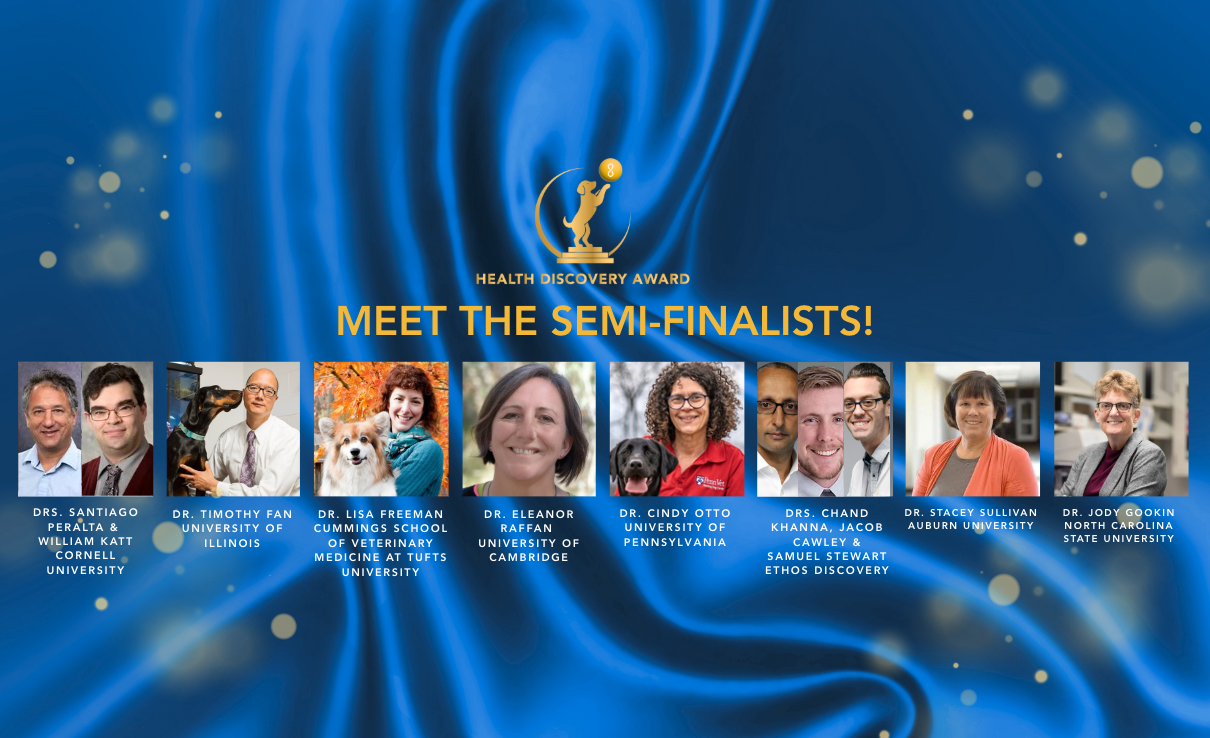
Among this year’s applicants, eight extraordinary breakthroughs have risen to the top, representing progress across genetics, nutrition, cancer, and beyond.
The 2025 Semi-Finalists
1. New Hope for Canine Oral Cancer – Cornell University (Drs. Peralta & Katt)
A new use for the existing human cancer drug Trametinib shows the promise in shrinking aggressive oral tumors in dogs. This research offers a more targeted and less invasive option for a disease that has long lacked effective treatments, with the potential for a better quality of life for affected dogs.
2. Innovative Cancer Treatment That Shows Promise in Dogs and Humans – University of Illinois (Dr. Timothy Fan)
A pioneering approach known as intratumoral cytokine therapy delivers immune-boosting proteins directly into tumors to help the body fight cancer. Early results show strong potential for treating solid tumors in dogs and have already prompted human clinical trials.
3. A Clue in the Search for the Cause of Diet-Associated Heart Disease - Cummings School of Veterinary Medicine at Tufts University (Dr. Lisa Freeman)
The discovery of abnormal fatty molecules in the urine of dogs with diet-associated dilated cardiomyopathy eating certain diets provides critical insight into the metabolic basis of disease and opens new possibilities for diagnosis, prevention, and treatment.
4. New Genetic Insight Could Dramatically Reduce Spinal Disease in Dachshunds – Auburn University (Dr. Stacey Sullivan)
This genetic discovery identifies a way to reduce the risk of back disease in Dachshunds by selecting for fewer copies of a specific gene variant. It offers breeders and owners a practical, science-based path toward healthier spines in this beloved short-legged breed.
5. Dog Gallbladder Disease Has Similarities with Cystic Fibrosis – North Carolina State University (Dr. Jody Gookin)
Researchers uncovered that gallbladder mucocele, a deadly canine disease, shares molecular similarities with cystic fibrosis through dysfunction of the CFTR protein. This groundbreaking link reveals new directions for prevention and therapy in both veterinary and human medicine.
6. Training Dogs to Use the Most Effective Method to Cool Down When Overheated – University of Pennsylvania (Dr. Cindy Otto)
In a creative approach to preventing heatstroke, researchers proved that the most efficient way for overheated dogs to cool down after exertion is to dunk their heads in water, and that they could be trained to do it themselves. This finding offers a safe, practical method to protect working and athletic dogs from severe heat-related illness and even death.
7. Newly Identified Genetic Risk for Obesity in Labrador Retrievers – University of Cambridge (Dr. Eleanor Raffan)
This discovery revealed a genetic variant that affects appetite control in Labradors and increases the risk of obesity. It also demonstrated that with good management, affected dogs can stay healthy. It provides fresh insight into both canine and human obesity without stigma or blame.
8. Large-Scale Cancer Trial Reveals New Insights – Ethos Discovery (Drs. Khanna, Cawley, Stewart)
The landmark PUSH study followed nearly 500 dogs with splenic tumors, revealing that more are benign than originally thought. This discovery is changing how veterinarians approach diagnosis and treatment of this often devastating condition. These findings lay groundwork for better care and future cures for hemangiosarcoma.
What's Next
Throughout October and November, CHF will spotlight each semi-finalist, sharing the stories behind their discoveries. The three finalists will be announced in November, leading up to the winner’s reveal at the Canines & Cocktails Gala on December 11, 2025.
These are the breakthroughs defining the next generation of canine health research and lighting the path toward the next 30 years of discovery. But that light can only shine as brightly as the support behind it.
As the world’s only nonprofit solely dedicated to advancing canine health through science, the AKC Canine Health Foundation is committed to ensuring that transformative research continues—research that helps dogs everywhere live longer, healthier, more vibrant lives.
Your gift to the Discovery Fund fuels the next wave of innovation and makes new breakthroughs possible. Together, we can power the science that gives every dog a healthier tomorrow.