


More Good Days Through the Power of Immunotherapy
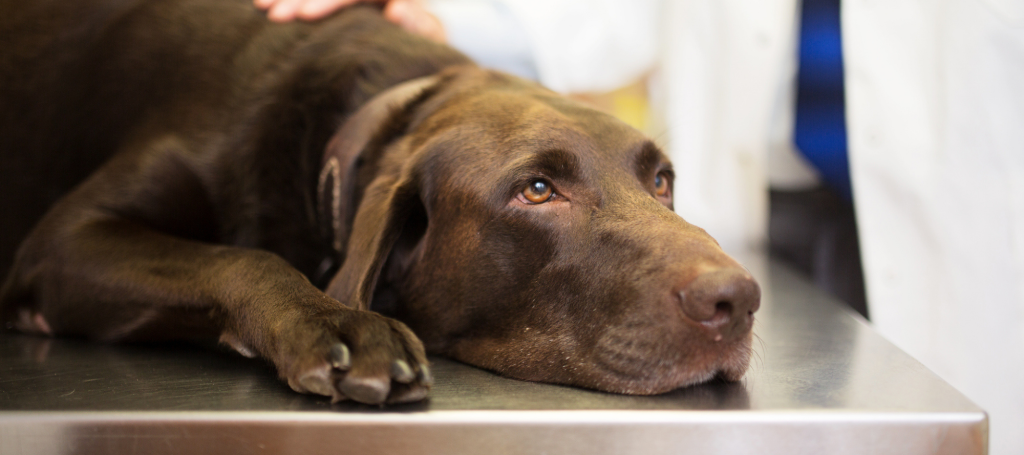
Bladder cancer affects about 2 percent of dogs, and for the families who experience it, the impact is lasting and profound. The most common form, called urothelial cell carcinoma (formerly transitional cell carcinoma), often begins quietly. A little straining. Microscopic amounts of blood in the urine. More frequent trips outside.
By the time these changes appear, the tumor has often already grown within the bladder.
For many dogs, traditional treatment includes chemotherapy and nonsteroidal anti-inflammatory drugs (NSAIDs) such as meloxicam. These therapies can bring comfort and offer meaningful time together. At the same time, they are not curative, and side effects can add challenges for sick patients.
That reality is what drives researchers like Dr. Timothy Fan, professor of veterinary clinical medicine at the University of Illinois Cancer Center, to pursue something more.
His goal is simple and powerful. More good days for dogs and the people who love them.
Rethinking Treatment: Immunotherapy for Dogs
In human medicine, a breakthrough called checkpoint blockade immunotherapy, also known as an immune checkpoint inhibitor, has changed how many cancers are treated.
The immune system uses checkpoint proteins to identify what belongs in the body and what does not. Cancer cells can hide by manipulating these checkpoints, preventing them from being recognized as foreign. Checkpoint blockade antibodies break this disguise, helping the immune system identify tumor cells and restore its natural defense role.
In older adults with bladder cancer, this novel therapy has created new possibilities. Dr. Fan, supported by a grant from the AKC Canine Health Foundation, is applying this human breakthrough to veterinary medicine. Checkpoint inhibitors help about 30 percent of people with bladder cancer, and Dr. Fan expects similar results in dogs.
Chemotherapy remains a valuable first-line treatment. Yet many dogs diagnosed with bladder cancer are seniors, and some also have reduced kidney function. Certain chemotherapy drugs can be challenging for these patients. Immunotherapy offers a new approach that works with the body’s own defenses.
Early in this study, Dr. Fan and his team started treating dogs with the checkpoint antibody alone. As of February 2026, seven dogs have received this treatment. Once 10 to 15 dogs finish this phase, the team will proceed to the next step.
A Two-Fold Strategy for Stronger Results
Cancer uses clever, multi-layered survival strategies. Besides its ability to manipulate checkpoint proteins to deceive the body into thinking it belongs, it also suppresses the immune system to avoid being attacked.
Tumors can reduce the activity of T cells, which are immune cells responsible for attacking cancer. Dr. Fan describes this as a smoky cloud that hides immune cells from clearly seeing their target, the cancer cell.
To clear that cloud, Dr. Fan’s team plans to add a second medication that targets an enzyme called IDO1. This enzyme helps create and maintain the immune-suppressive microenvironment that supports cancer. In targeting IDO1, the goal is to reduce that “smoke.”
By combining checkpoint blockade with an IDO1 inhibitor, the hope is to give the immune response an advantage against cancer so that dogs and families get more time together.
The study will include up to 30 dogs. Dr. Fan aims to build on the success in humans and explore the full potential of immunotherapy in canine patients.
Researchers are still uncovering the full potential of immunotherapy in the fight against cancer. What they know for sure is that each discovery brings us closer to better options, stronger responses, and more good days.