


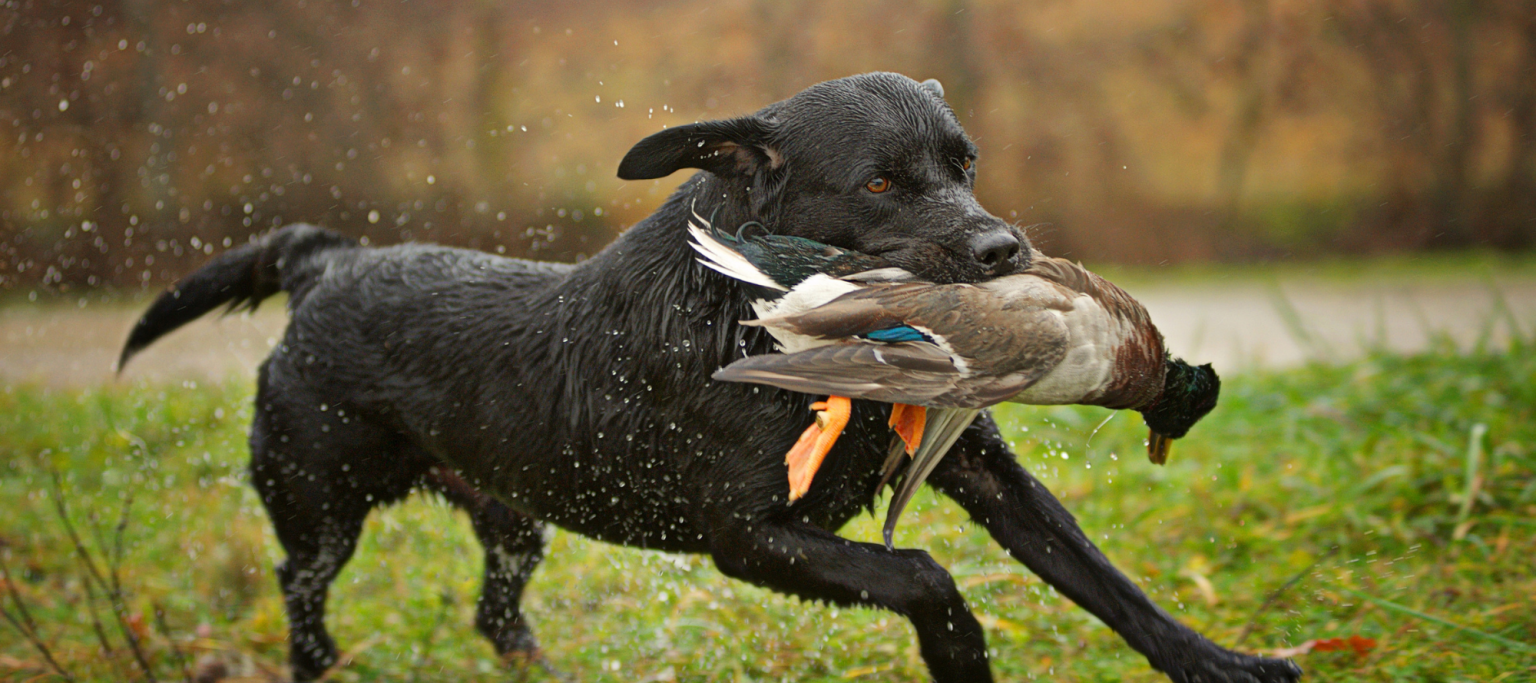
Whether they’re racing across a trail, competing on the agility course, retrieving game during a hunt, or working alongside first responders, active dogs often push their bodies to the limit. Conditioning prepares active dogs to perform demanding work by improving their exercise capacity, strength, stamina, and recovery. But even the fittest dogs must contend with one unavoidable challenge: heat.
Unlike people, dogs have a limited ability to cool themselves. They rely primarily on panting to release excess body heat, making them more vulnerable to overheating during strenuous exercise or hot weather. When body temperature rises too high—a condition known as hyperthermia—the effects can quickly become dangerous.
CHF-funded research is advancing our understanding of how a dog’s muscles respond to intense exercise and heat stress. In one study, Dr. Michael Davis and colleagues at Oklahoma State University examined how athletic conditioning changes skeletal muscle function as body temperature rises.
The Surprising Ways Conditioning Changes Muscle Function
Dr. Davis and his team began with a practical question: how does athletic conditioning change the way a dog’s muscles produce energy when they heat up during intense exercise?
They studied Alaskan sled dogs, elite canine athletes bred and conditioned for sustained endurance work. The team compared muscle samples collected before and after a season of training and racing, then evaluated how the muscles performed as temperatures increased.
The researchers wanted to know whether athletic conditioning helps muscles withstand higher temperatures. The results told an unexpected story.
Athletic conditioning increased the muscles’ ability to produce energy, suggesting they were better prepared for demanding exercise. But as temperatures rose, the muscles became less efficient. Instead of directing as much energy toward muscle work, they released more of it as heat.
This tradeoff may actually represent a protective adaptation, helping muscles manage the stress of high temperatures rather than simply maximizing capacity.
What This Means for Dogs in Motion
For handlers, trainers, veterinarians, and dog owners, this research reinforces an important point: even well-conditioned dogs need careful management in the heat.
While this study focused on Alaskan sled dogs, it provides valuable insight into the complex ways canine athletes adapt to the demands of intense exercise. Conditioning does not simply make muscles stronger or more efficient—it changes how they respond to challenges like heat.
The findings also remind us why research matters. The physiology of canine athletes can be different from what we expect, and studies like this help build a more accurate understanding of how dogs respond to training, conditioning, exertion, and environmental stress.
For those who train, care for,, and compete with active dogs, these findings can shape smarter approaches to conditioning, recovery, and heat safety.
CHF-funded research continues to advance our understanding of canine performance, providing the knowledge needed to keep dogs active, safe, and ready for the work they love.
Support research for active, working, and sporting dogs at akcchf.org/dogsinmotion.