

About Dr. Adin
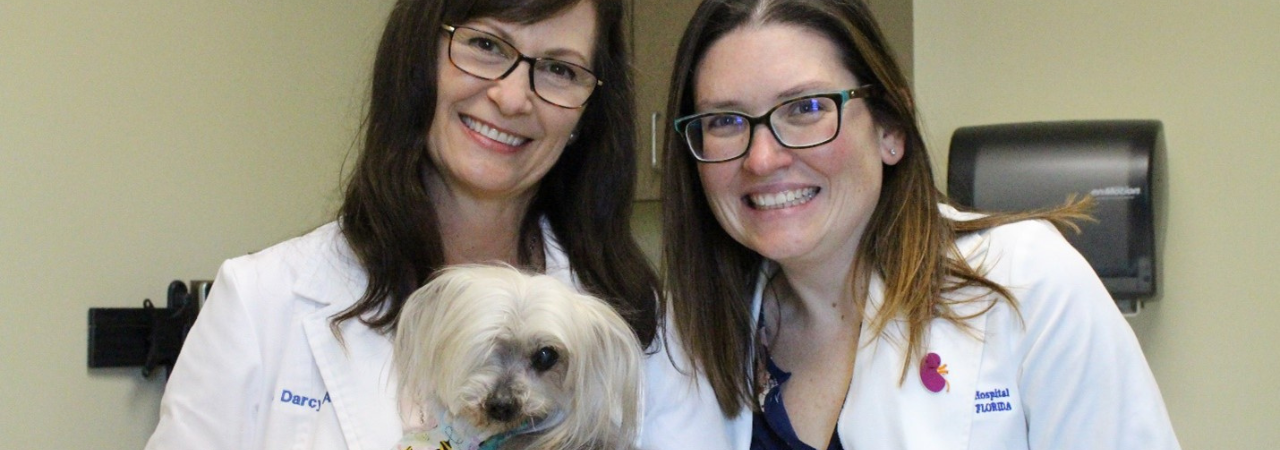
Dr. Darcy Adin is a passionate veterinary cardiologist whose mission is to help dogs with heart disease live longer, healthier lives. As both a clinician and researcher, she believes that advancing patient care means not only offering state-of-the-art treatment but also conducting meaningful clinical research that directly benefits her patients. Since her residency training, Dr. Adin has focused on understanding and improving therapies for degenerative mitral valve disease, the most common and life-limiting cardiac condition in dogs. Her research has explored how diuretics and neurohormonal systems such as the renin-angiotensin-aldosterone system (RAAS) influence heart failure progression, and more recently, how blood chloride levels play a key role in disease severity and outcomes. At the University of Florida, Dr. Adin continues to work with a dedicated team of collaborators who share her goal of translating clinical discovery into tangible improvements for canine health.
Research Approach
Congestive heart failure (CHF) is a prevalent and life-threatening condition in older, small-breed dogs. Despite advances in medical management, many dogs with CHF ultimately die from their disease or from complications associated with treatment. One emerging focus of Dr. Adin’s research is the role of hypochloremia—low blood chloride levels often caused by diuretic use—which has been linked to worse outcomes in both dogs and humans with heart failure.
With previous funding from the AKC Canine Health Foundation (AKCCHF), Dr. Adin’s team discovered that hypochloremia is more severe in dogs with advanced, difficult-to-control heart failure. Building on these findings, her current study investigates whether acetazolamide, a chloride-retaining diuretic not typically used in canine heart failure treatment, can help restore blood chloride levels in dogs receiving standard care. The study aims to determine whether correcting hypochloremia can not only stabilize these patients but also slow disease progression and improve survival.
An inspiring case is “Susie Q,” a 15-year-old Maltese participating in a related study evaluating oral potassium chloride supplementation. After treatment, Susie Q’s condition improved significantly—she no longer required frequent abdominal fluid removal and continues to thrive—illustrating the potential for chloride-focused therapies to improve quality of life in dogs with CHF.
Potential Impact
The AKC Canine Health Foundation’s continued support has been essential to advancing Dr. Adin’s groundbreaking work in veterinary cardiology. By exploring the importance of chloride balance in heart failure, her research could transform the way CHF is managed in dogs, leading to more effective and individualized treatment strategies.
If acetazolamide or other chloride-correcting interventions prove beneficial, veterinarians may soon have new tools to improve outcomes and extend the lives of countless dogs suffering from heart disease. Dr. Adin’s research embodies the intersection of compassionate care and scientific innovation—offering hope for a future where dogs with congestive heart failure can live longer, happier lives.